

Short answer
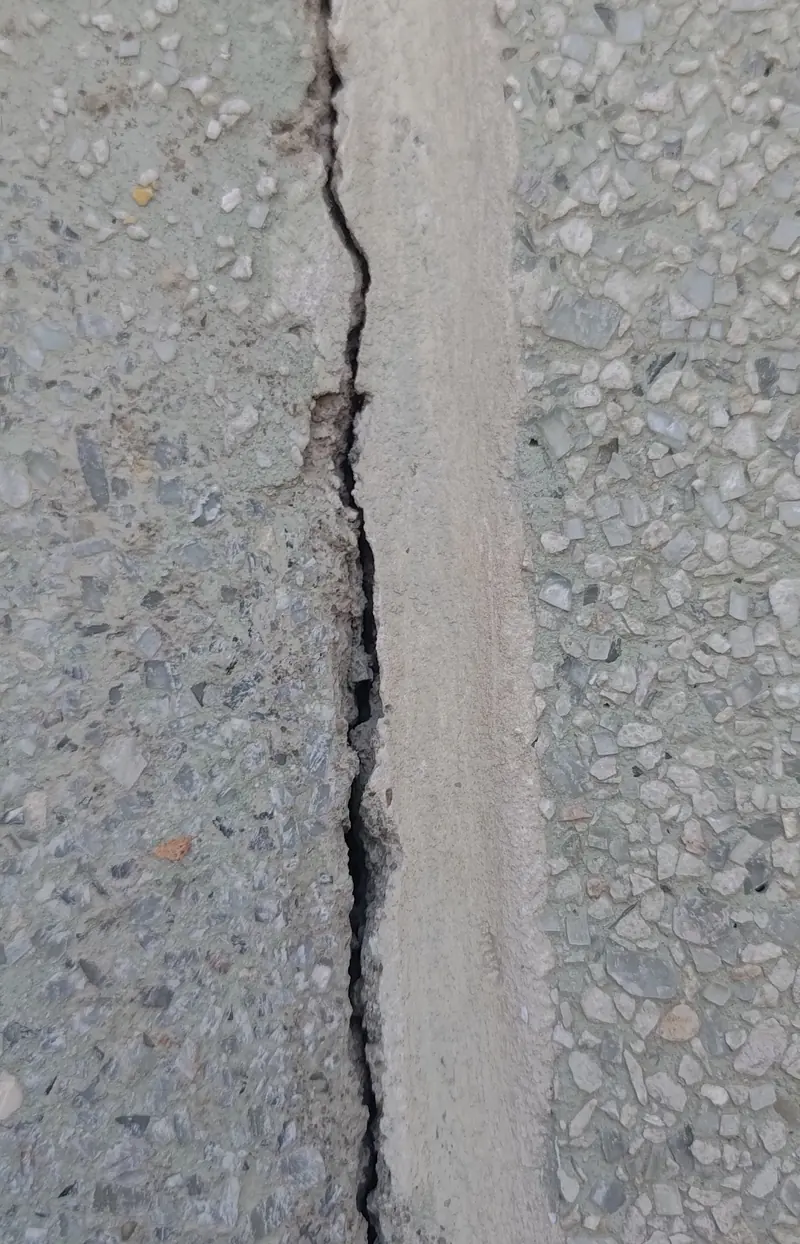
Most cracks in a façade are fine, stable and dealt with during the painting work. The worrying ones are those that keep opening. Width gives the first clue: below 0.3 mm it is nearly always render shrinkage; between 0.3 and 2 mm it needs its own treatment; if the crack is still developing, an engineer should see it before any money is spent on paint.
Three types, three answers
| Type | What it usually is | How it is treated |
|---|---|---|
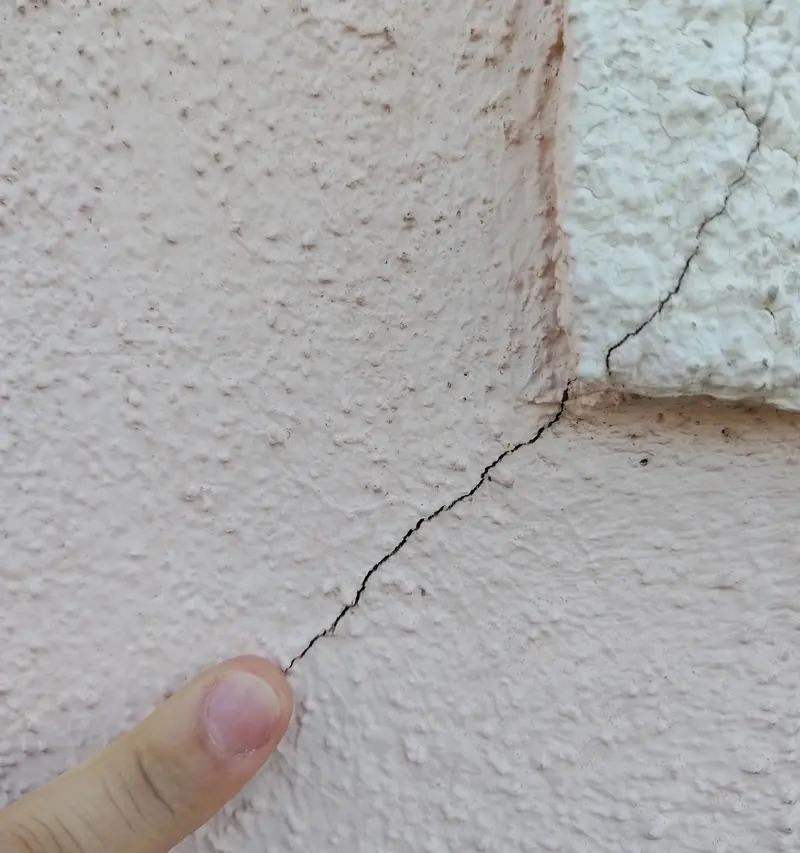
| Hairline, under 0.3 mm | Render shrinkage, no movement | Water repellent or a high-build paint |
| 0.3 to 2 mm, stable | Thermal movement of the building | Open into a V and seal with elastic sealant, or reinforce with embedded glass-fibre mesh |
| Active, still developing | Structural movement | Not a painter's job: tell-tales, dated photographs and an engineer's assessment |
How to tell whether a crack is moving
Width is measured with a crack gauge, a card printed with lines of known thickness. But today's width says little. What matters is whether it will be wider tomorrow.
- Plaster tell-tales. Small bridges of plaster are fixed across the crack. If they break after a few weeks, the crack is active.
- Dated photographs, always from the same angle and with the gauge in the picture.
- Ask the people who live there. A crack that appeared this winter is different from one that has looked the same for twenty years.
On a garden wall or a wall with a corner crack, we fix the tell-tales on the first day of the job. If they break, we stop in that area and propose an engineer's assessment before any further cost.
Where they usually appear
- At the corners of windows and stone surrounds, where stresses concentrate.
- Where different materials meet, for example between an old wall and an extension.
- In walls with soil against them. Wet soil pushes nearly twice as hard as dry soil.
- Over cement patches in lime render. Cement is stiffer and cracks at the edges.
What not to do
- Fill with rigid filler and paint. If the crack moves at all, the filler breaks and the crack reappears in the same place.
- Seal only at the surface. A thermal movement crack has to be opened so the sealant has depth to work with.
- Ignore the fine ones. A half-millimetre crack in wind-driven rain lets in enough water to make the paint peel.
In short
Measure, record and watch before repairing. A stable crack is treated well and stays solved. An active crack needs a diagnosis that is not a painter's to make, and a good painter is the first to say so.