

Short answer
An expansion joint is the gap left on purpose between two buildings so that each can move. If it is closed with rigid filler, the filler cracks, opens along one side and becomes a way in for water. The right repair is to remove all the old filler, fit a backer rod and seal with an elastic sealant sized for the movement.
What it is for
Buildings move. They expand in heat, contract in cold and settle over the years. Two buildings side by side do not move at the same pace. The joint between them is the space that lets them do so without breaking each other.
How it fails
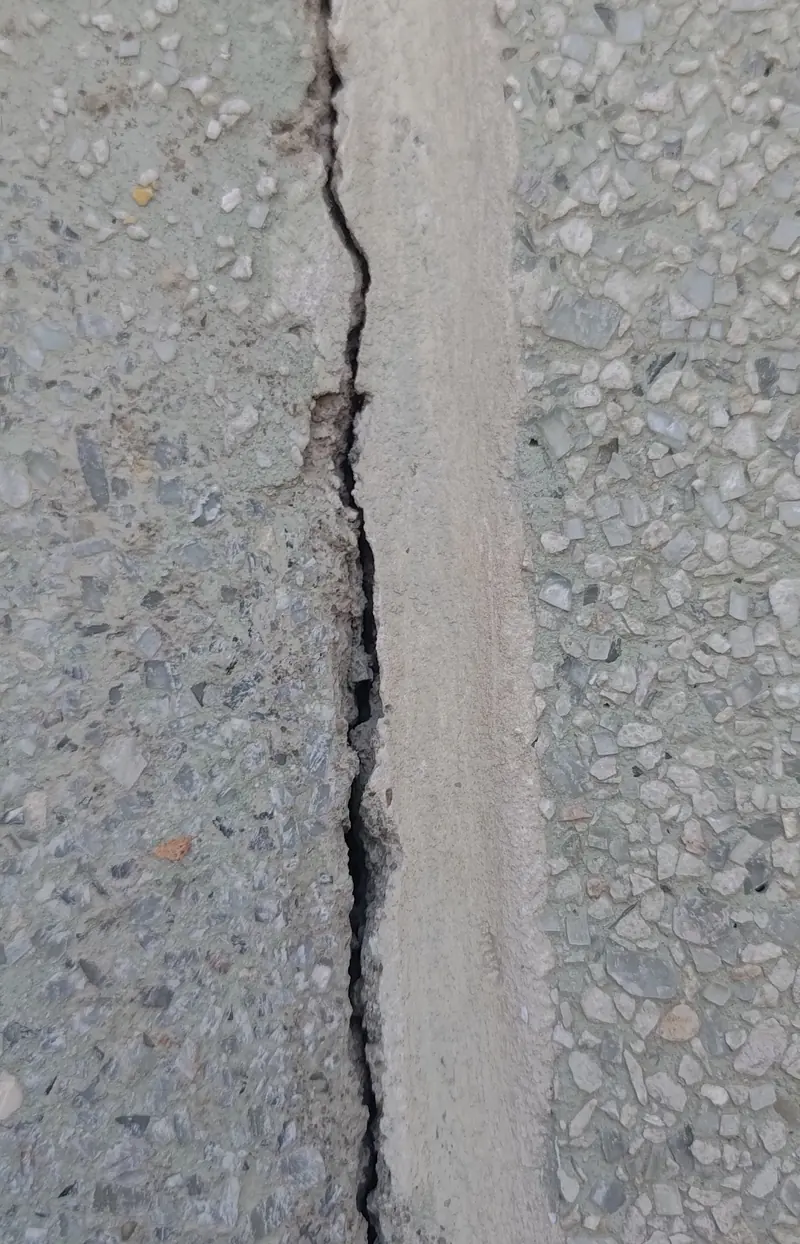
The most common mistake is to treat the joint as a crack and fill it with mortar or rigid filler. For a few months it looks solved. Then the building moves, the filler cannot follow and it breaks. It does not usually break down the middle: it comes away from one side and opens a fine gap along the full height.
Water gets in through that gap whenever it rains with wind. On the upper floors, where the joint is most exposed, stains appear on the wall that meets the neighbouring building.
How to repair it properly
- Remove all the old filler, until the joint is clear. Sealing over what is there will crack again.
- Fit a backer rod, a foam cord that limits the depth of the sealant and gives it the right shape to stretch.
- Seal with elastic sealant, with width and depth suited to the expected movement.
The first step is the most laborious, and it is what separates one quote from another. A quote that only says "joint sealing" may be proposing to seal over the top.
Who pays
The joint is shared by both buildings. The cost can be split with the neighbouring condominium and invoiced separately to each. It is worth speaking to the manager of the building next door before the owners' meeting: the scaffolding or access serves both sides.
Signs your joint needs attention
- A dark or cracked vertical line between the two buildings.
- Cracked or missing filler, plants growing in the joint.
- Damp stains indoors, on the wall that meets the neighbour, especially on the top floors.
The question to ask
When comparing proposals, ask each company: does the price include removing the existing filler? It is one of the eight questions we recommend asking of any façade quote.