

Short answer
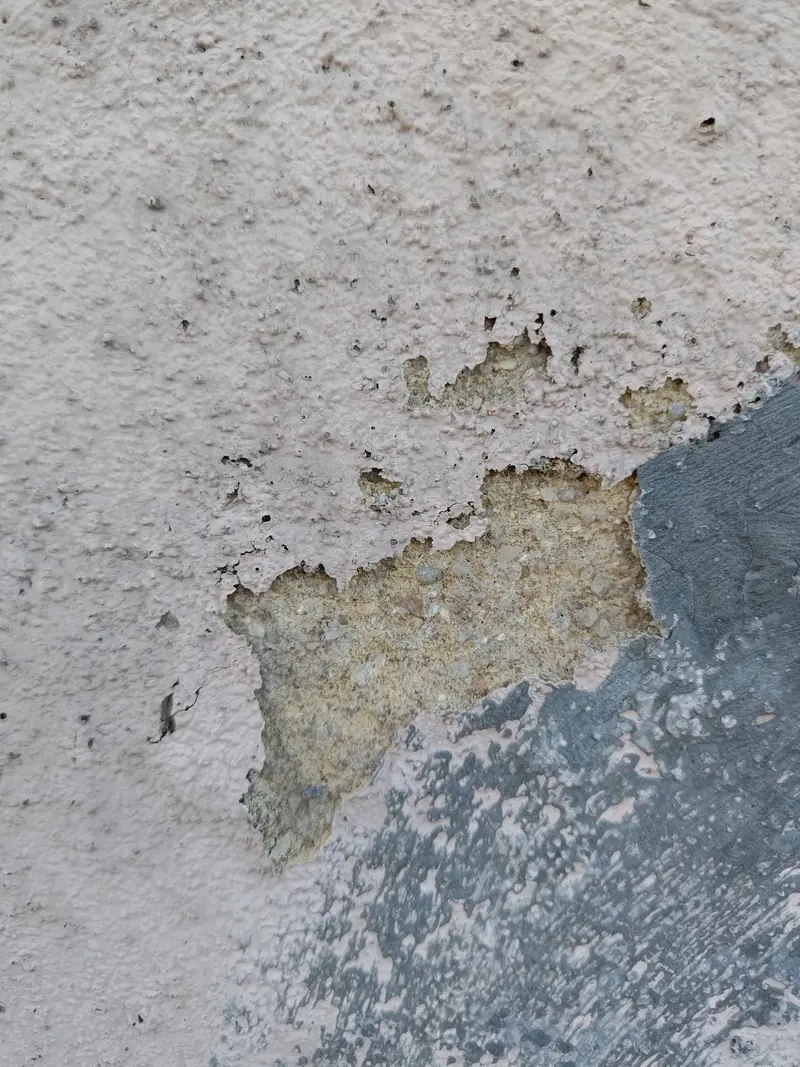
Nearly always because of moisture trapped inside the wall. Water gets in through cracks, cornices or the ground, tries to leave as vapour and meets a paint film that will not let it through. The pressure pushes the paint off from behind. Repainting without dealing with the source of the water repeats the problem within a winter or two.
The paint is rarely to blame
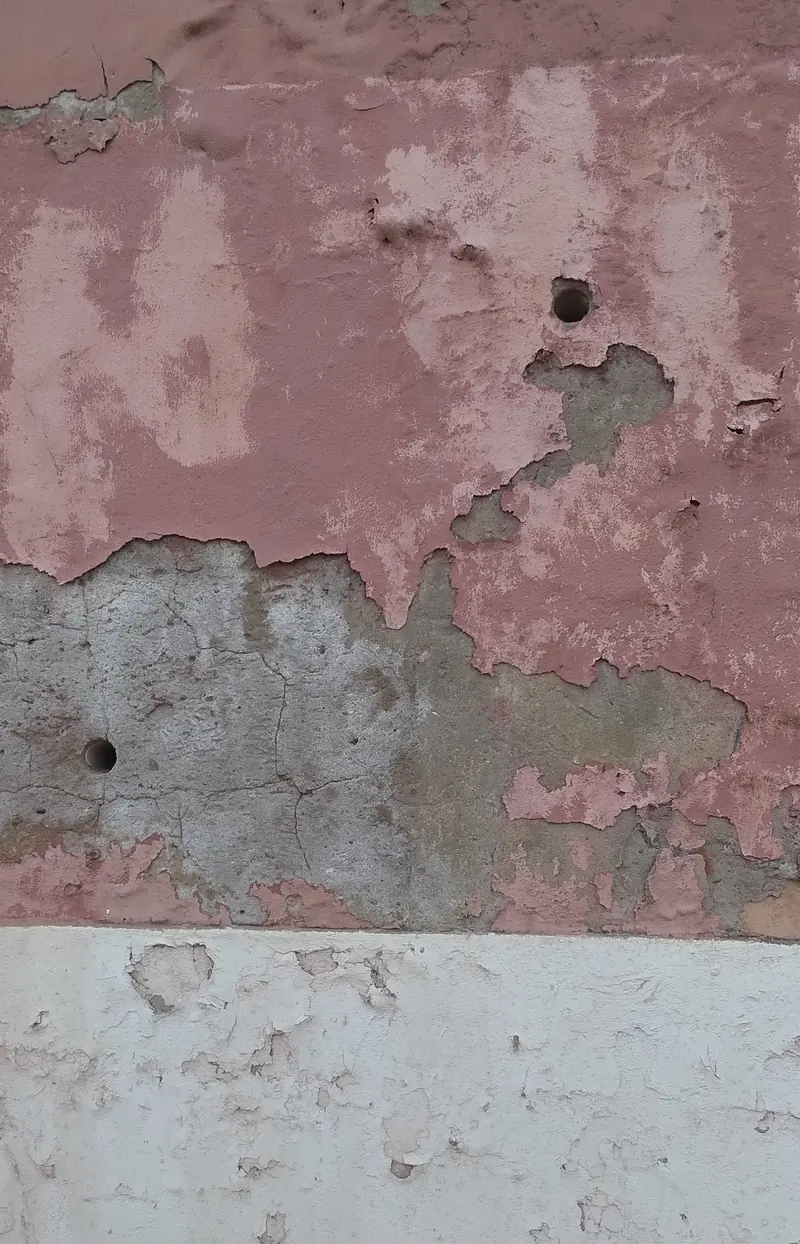
When an exterior paint job fails early, the first reaction is to blame the paint or the painter. Sometimes they deserve it. But on most of the façades we see in Lisbon the paint was good and well applied. The problem was underneath.
Durability failures in exterior paint are almost always caused by trapped moisture pushing the paint off the wall from behind.
Where the water gets in
- Fine cracks in the render. They look harmless, but in wind-driven rain they let in plenty of water.
- Nearly flat cornices, parapets and sills. They act as shelves: water sits on top and finds its way in.
- Expansion joints sealed with rigid filler, which cracks.
- The ground. Moisture rising through the base of the wall, especially on ground floors and garden walls.
- Cement patches over old lime render. They crack at the edges and let water in.
Why plastic paint makes it worse
An acrylic paint forms a continuous film with low vapour permeability. While the wall is dry, it works well. When there is moisture inside, the vapour tries to escape, meets the film and lifts it. First come blisters, then the paint comes off in sheets.
On old walls built with lime renders this is even more common. These walls have always exchanged moisture with the air. A mineral paint lets them keep doing so.
How to confirm it
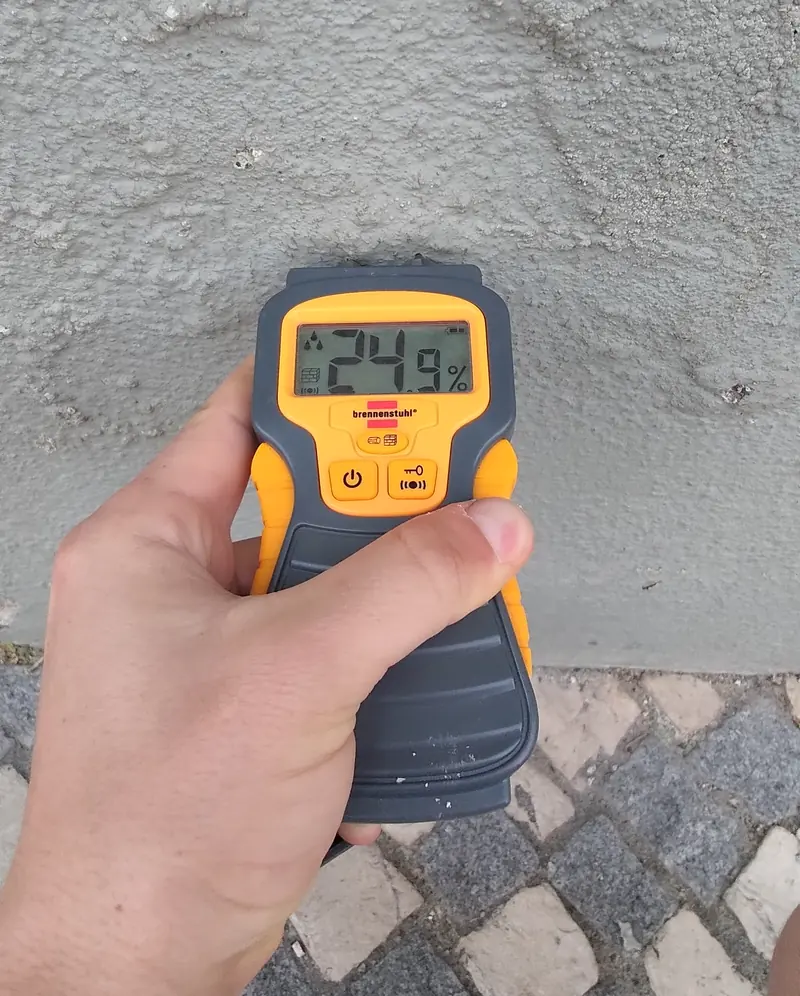
- Measure the moisture in the render at several points with a meter, and note the readings.
- Look at the pattern. Is it worse below the cornices? Near the ground? Only on the elevation facing the rain? The place points to the cause.
- Test the adhesion of the paint that still looks sound, with a cross-cut and adhesive tape. If it lifts easily, it is no base for anything.
What to do, in the right order
- Stop the water: close the path it is taking.
- Let the wall dry and confirm with the meter.
- Remove paint that has lost adhesion and any loose render.
- Repair with mortars compatible with the wall.
- Paint with a vapour-permeable system, in complete wall sections.
The most common mistake
Painting over the façade. It fixes the colour for two winters and nothing else. A quote that only talks about coats and colours, without saying where the water gets in, is proposing exactly that.
If you would like a second opinion on your façade, send us two photos.