

Short answer
Portuguese law expects conservation works at least once in every eight-year period. In practice the right interval depends on how exposed the building is, on the paint system, and on the state of the elements where water gets in. More useful than counting years is a simple inspection every year, after the winter.
What the law says
The Regime Jurídico da Urbanização e Edificação (Decree-Law 555/99) states, in article 89, that buildings must undergo conservation works at least once in every eight-year period. The owner must also carry out whatever works are needed to keep the building safe, healthy and in good appearance. The municipality can order those works to be done.
It is not a rule about paint. It is a rule about keeping the building in good condition, and painting is one part of that.
What really decides
- Exposure. An elevation facing south or west, or a building near the river, ages faster than a sheltered façade.
- The paint system. A film-forming paint on a damp wall can fail within two winters. A mineral paint on sound render lasts far longer.
- The state of the weak points. Cornices, sills, joints and sealants fail before the paint does, and that is where the water gets in.
Signs that it is time
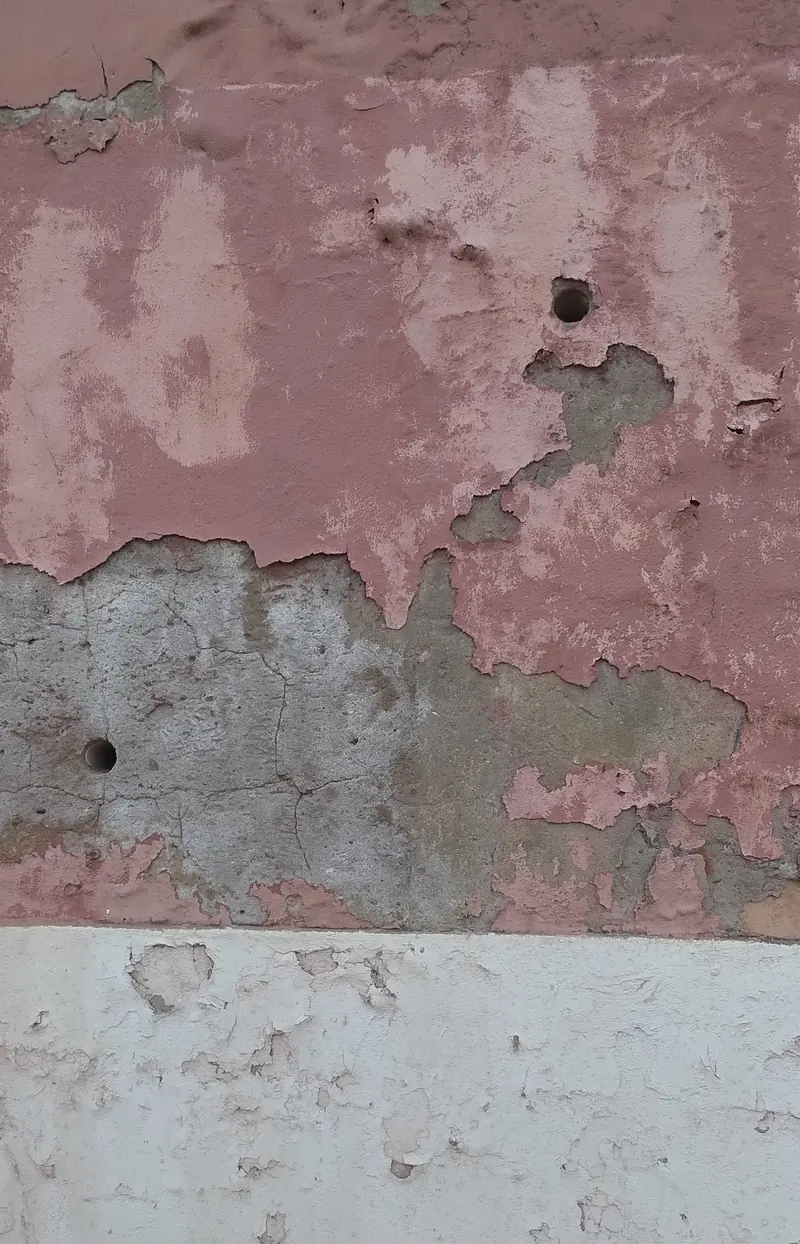
- The paint leaves powder on your hand.
- New cracks, or old cracks that have opened.
- Green or black staining, especially below cornices and sills.
- Dried-out or detached sealant at joints and window frames.
- Rust on railings and balustrades, staining the wall.
- Damp stains inside the apartments, on the façade side.
One or two signs call for maintenance. Several at once call for a survey.
The yearly inspection
In April or May, after the rains, walk round the building with a phone. Photograph the same points every year: cornices, joints, window corners, the base of the walls. In two or three years you have a record that shows what is stable and what is getting worse.
Maintenance postpones the big job
Clearing gutters, renewing a sealant and touching up a rusting railing are small jobs. Done in time, they push the full façade works back by years and reduce their cost when the time comes.
The best time of year
| When | For what |
|---|---|
| December to February | Ask for surveys and quotes |
| January to March | Decide at the owners' meeting |
| April to June | Award, schedule and sort the permits |
| September to November | Carry out the work: stable weather and mild temperatures |
In July and August the heat on exposed façades dries paint too fast. In deep winter the rain delays the work and the wall does not dry.
If your building is getting close, see how we work with condominiums.