

Short answer
Salitre, or efflorescence, is the white powder that appears when moisture travels through a wall and evaporates, leaving behind the salts it was carrying. Paint does not fix it. The fix is to cut off the source of moisture, remove the salts dry, and use materials that let the wall breathe.
What it actually is
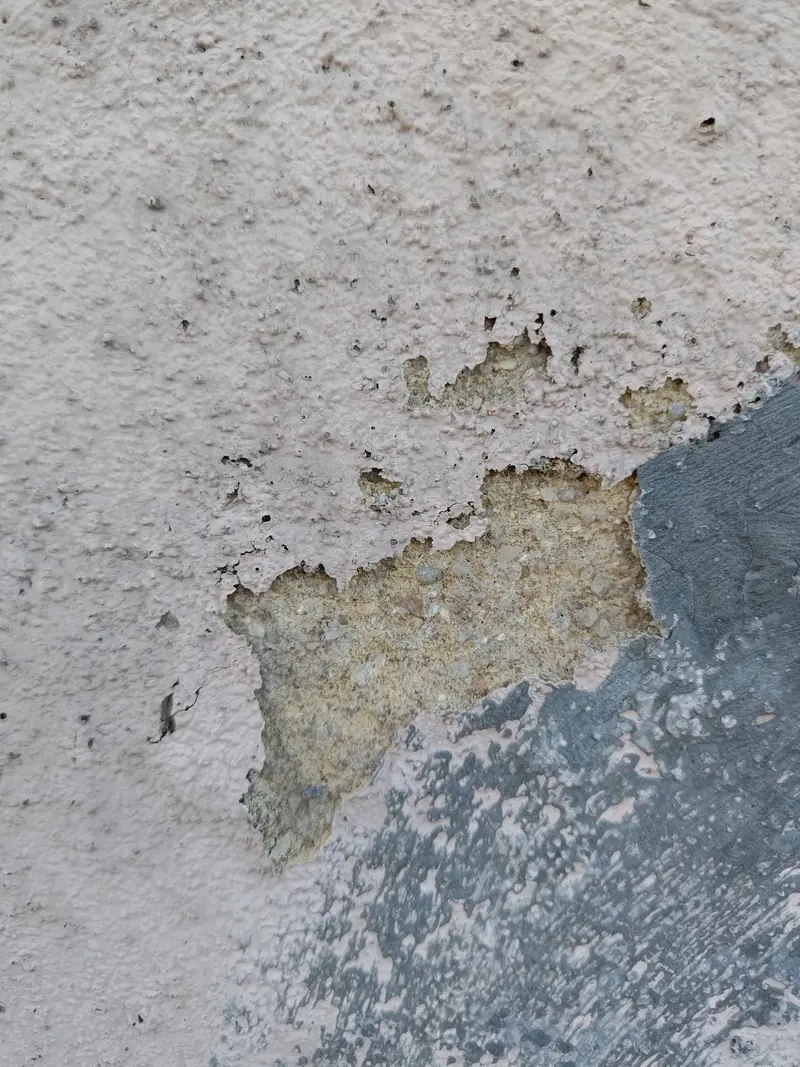
Water moving through a wall dissolves salts from the ground, the mortars and the bricks themselves. When it reaches the surface and evaporates, the salts stay. They crystallise, expand and push paint and plaster off the wall. The white powder is only the part you can see.
Why it keeps coming back
Because as long as moisture is travelling through the wall, salts keep arriving at the surface. Cleaning and painting over it treats the symptom. A few months later the powder is back and the new paint is blistering.
What never to do
- Wash with water as a first step. Water dissolves the salts and carries them back into the wall. Brush them off dry first.
- Apply impermeable paint on the inside. It traps the moisture, which ends up coming out further along or higher up, and the paint blisters again.
- Repair with gypsum plaster or gypsum-based fillers on buried walls or walls with active salts. Gypsum is itself a source of sulphates in that setting.
- Paint over active salts. No coating bonds to a surface that is shedding salt.
Two possible routes
A breathing system. The contaminated render comes off and a macroporous lime render goes on, designed to store salts inside itself without breaking down, finished with mineral paint. The wall keeps drying outwards. This is the right answer when the moisture cannot be fully eliminated, as in basements and walls against soil. The new render needs three to four weeks to cure before it is painted.
A blocking system. An anti-salt primer followed by filler and paint. It only makes sense when the source of moisture has been dealt with and the wall is not below ground.
Step by step
- Find and fix the source of the moisture. Stains above the skirting, for example, often come from the façade and not from the floor.
- Remove the salts dry, with a brush.
- Take off the failed plaster and render until you reach sound material.
- Let it dry and measure the moisture before closing up.
- Rebuild with the right system and paint with a vapour-permeable paint.
When you do not want the full job
That is a fair choice. A surface treatment improves the look for a while. But it is a stopgap and should be called one: if moisture returns to the wall, the salts and the stains come back. When a client chooses this route, we put it in writing in the quote, so nobody is caught by surprise.